STS-61C Fact Sheet
By Cliff Lethbridge
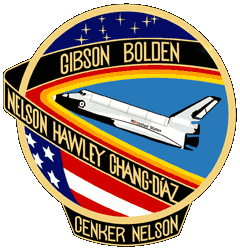
STS-61C — Columbia
24th Space Shuttle Mission
7th Flight of Columbia
Crew:
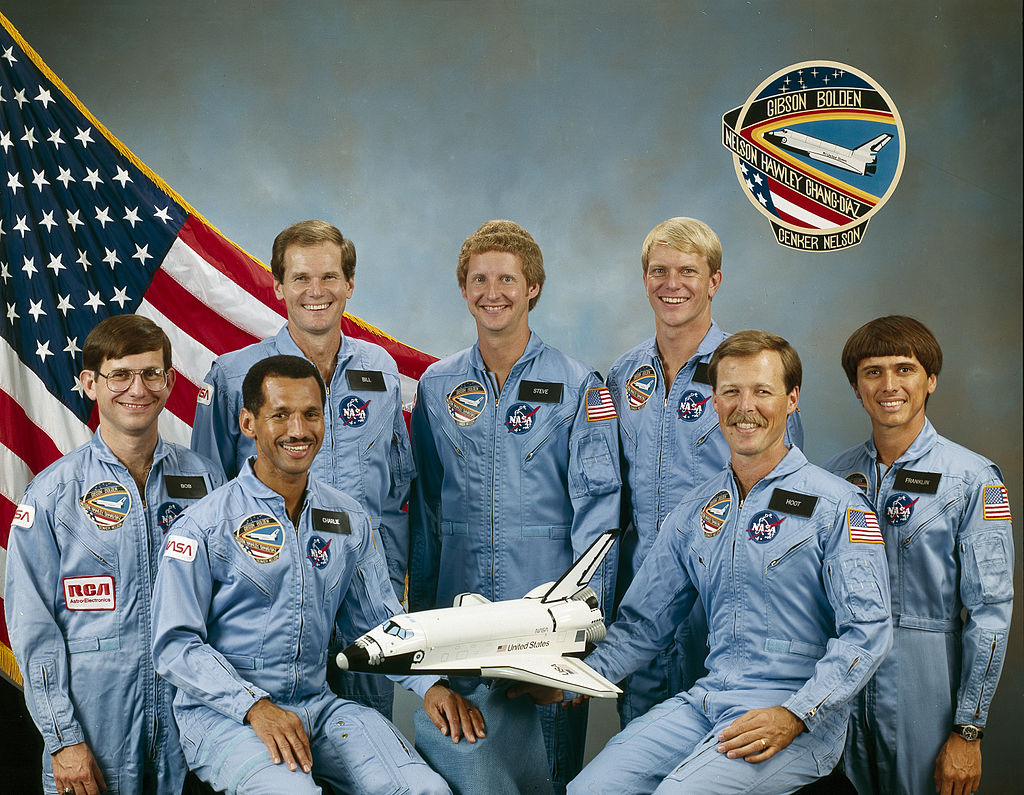
Robert L. Gibson, Commander
Charles F. Bolden, Jr., Pilot
Franklin R. Chang-Diaz, Mission Specialist
Steven A. Hawley, Mission Specialist
George D. Nelson, Mission Specialist
Robert J. Cenker, Payload Specialist
U.S. Representative Bill Nelson, Payload Specialist
Orbiter Preparations:
Tow to Orbiter Processing Facility – July 18, 1985
Rollover to Vehicle Assembly Building (for storage) – September 6, 1985
Rollover to Orbiter Processing Facility – September 26, 1985
Rollover to Vehicle Assembly Building – November 22, 1985
Rollout to Launch Pad 39A – December 2, 1985
Launch:
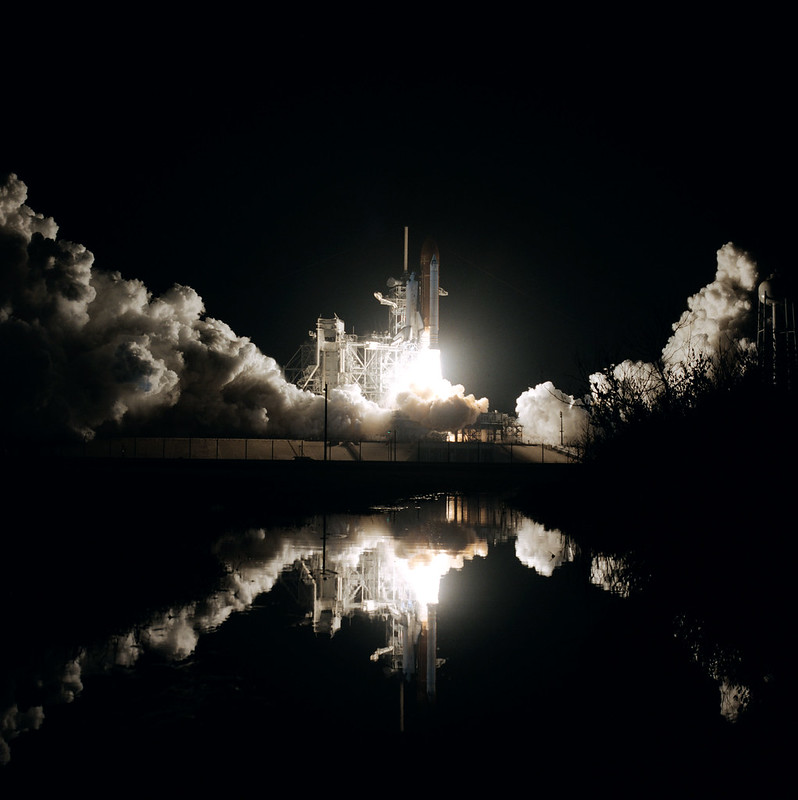
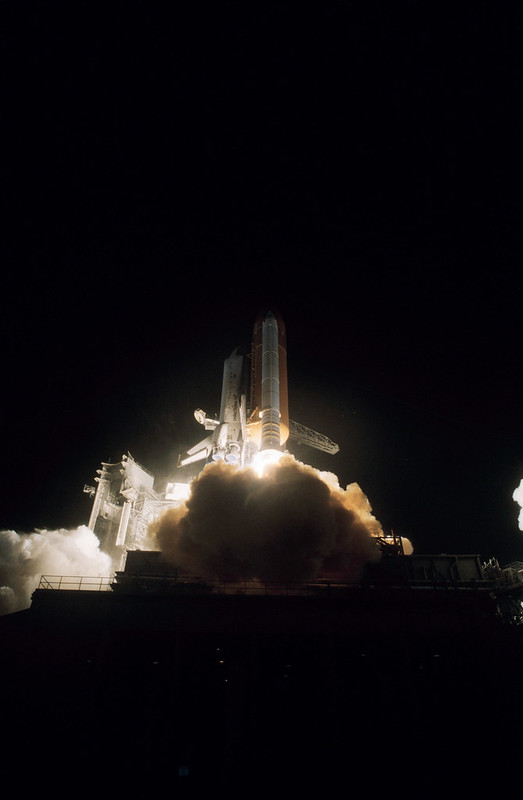
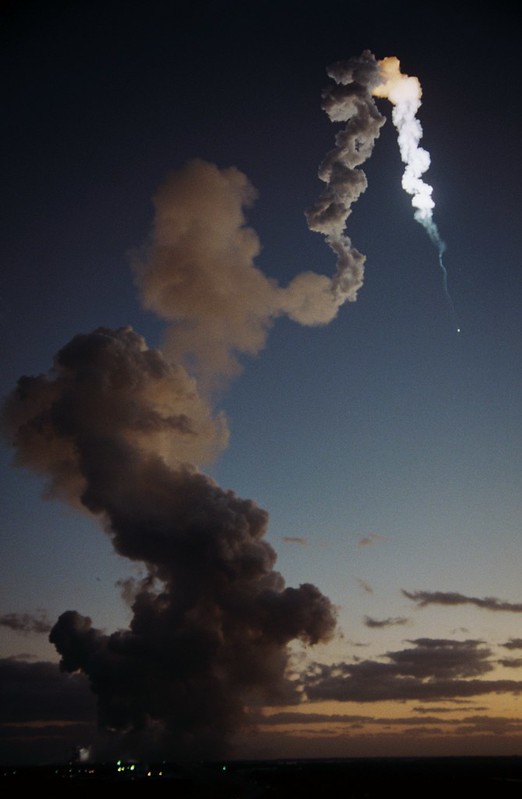
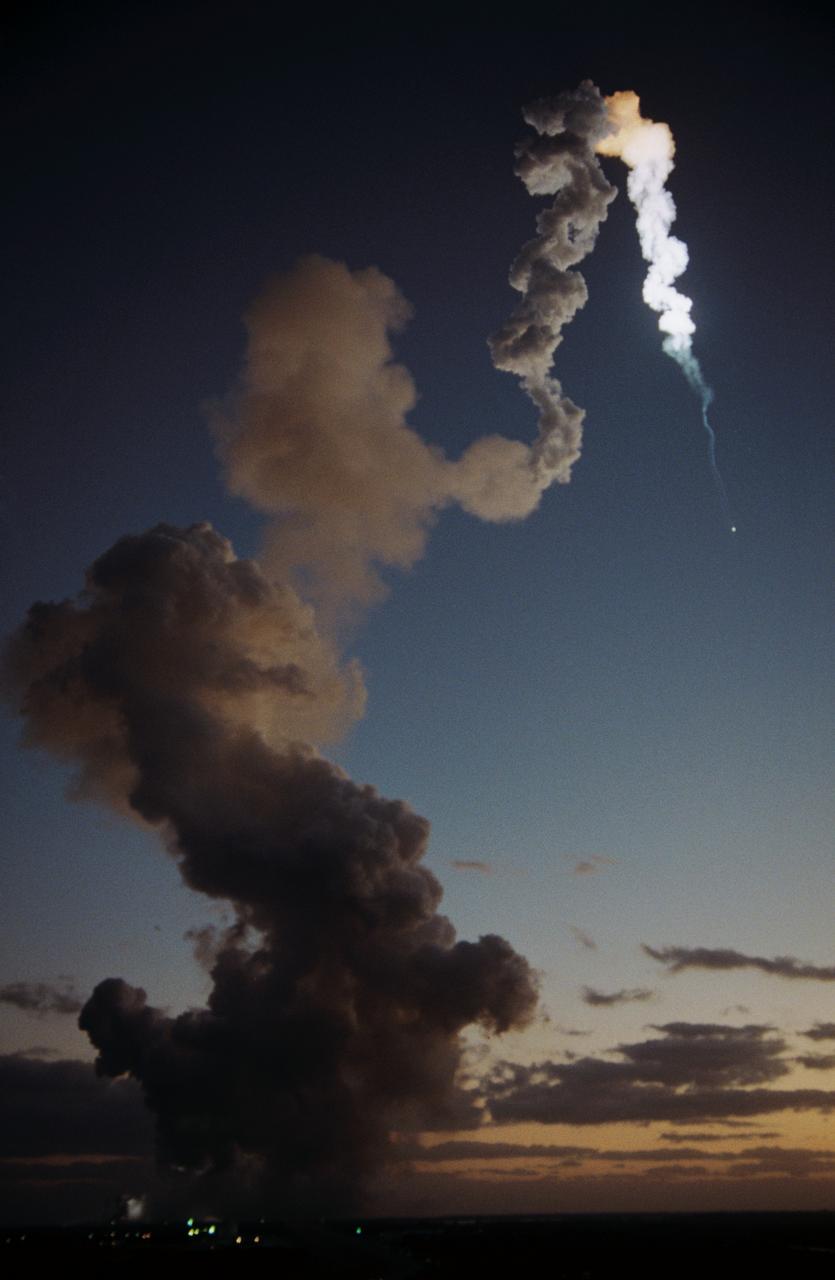
January 12, 1986 – 6:55:00 a.m. EST. Launch was scheduled for December 18, 1985 but was delayed one day when additional time was needed to close out Columbia’s aft engine compartment. December 19, 1985 launch attempt was scrubbed at T-14 seconds due to an indication that the right-hand solid rocket booster hydraulic power unit was exceeding r.p.m. speed limits. It was later determined that this reading was false.
January 6, 1986 launch attempt was scrubbed at T-31 seconds due to the accidental draining of approximately 14,000 pounds of liquid oxygen from Columbia’s external fuel tank. January 7, 1986 launch attempt was scrubbed at T-9 minutes due to bad weather at both trans-Atlantic abort sites (Moron, Spain and Dakar, Senegal).
January 9, 1986 scheduled launch attempt was delayed due to a launch pad liquid oxygen sensor breaking off and lodging in Columbia’s Main Engine Number Two prevalve. January 10, 1986 launch attempt was scrubbed due to heavy rain at the launch site. January 12 launch occurred as scheduled with no delays.
Landing:
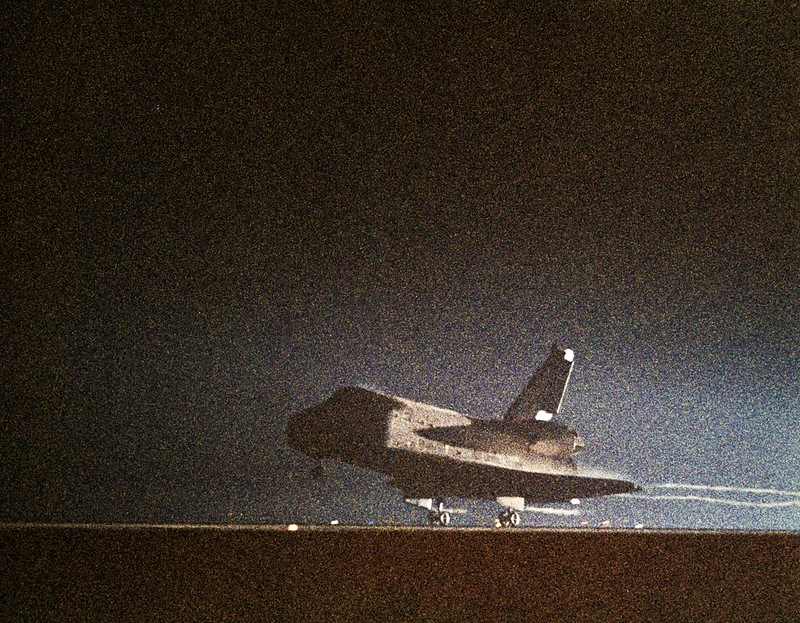
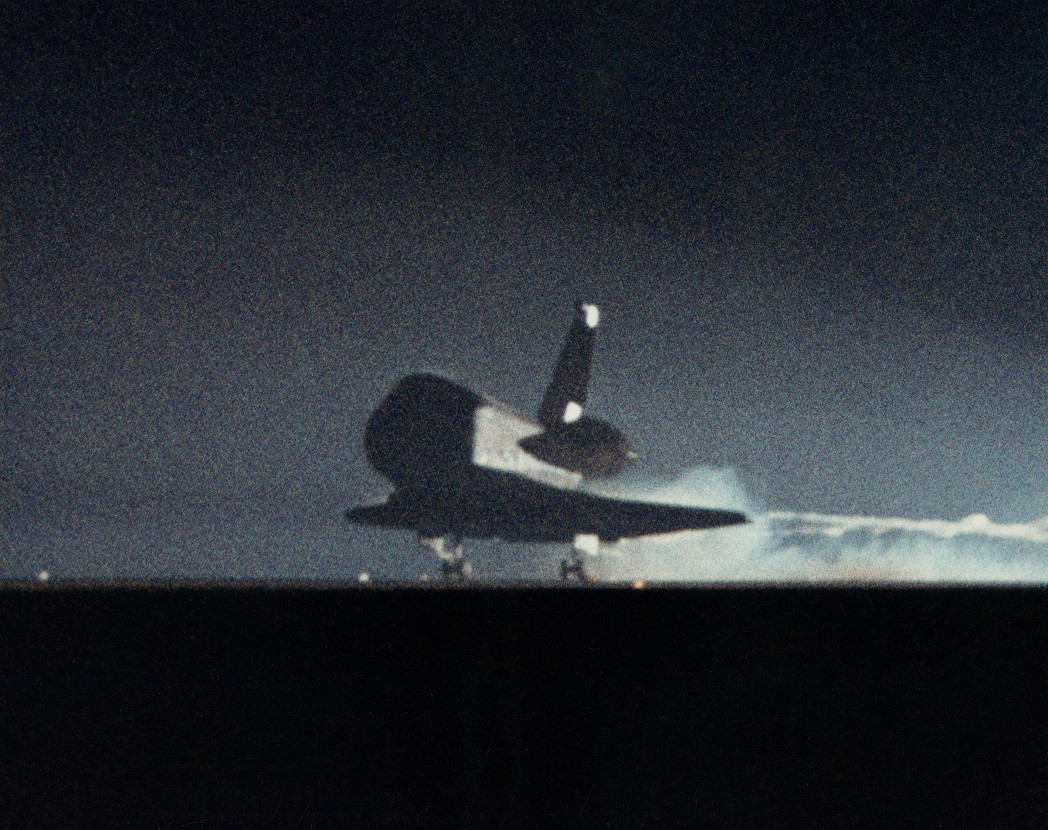
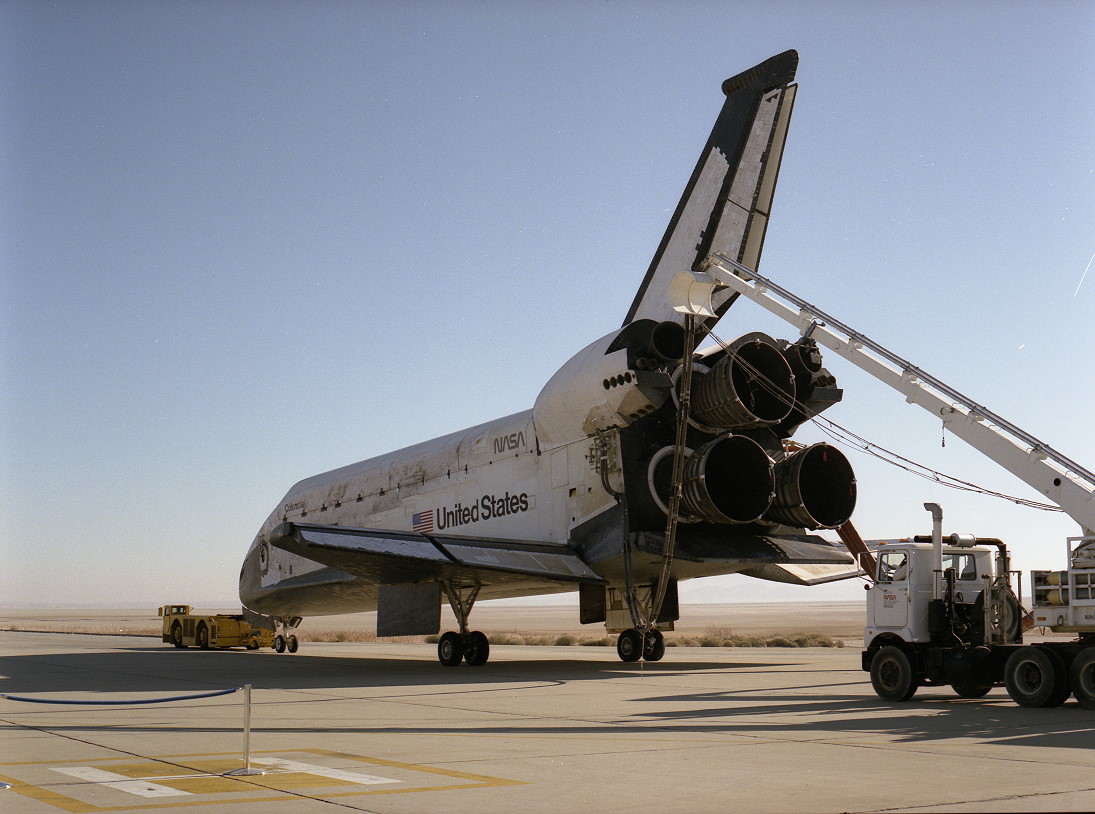
January 18, 1986 — 5:58:51 a.m. PST at Runway 22, Edwards Air Force Base, California. Rollout distance was 10,202 feet. Rollout time was 59 seconds. Mission duration was 6 days, 2 hours, 3 minutes, 51 seconds. Landing occurred during the 98th orbit.
This was the first scheduled landing at the Kennedy Space Center following STS-51D Shuttle damage. The KSC landing was originally planned for January 17, 1986 but was moved back to January 16, 1986 in order to save orbiter turnaround time. However, landing attempts at KSC on January 16, 17 and 18 were abandoned due to poor weather.
Mission Summary:
The mission carried America’s second civilian observer, U.S. Representative Bill Nelson (D-Florida). Nelson acted as a Payload Specialist and Congressional Observer.
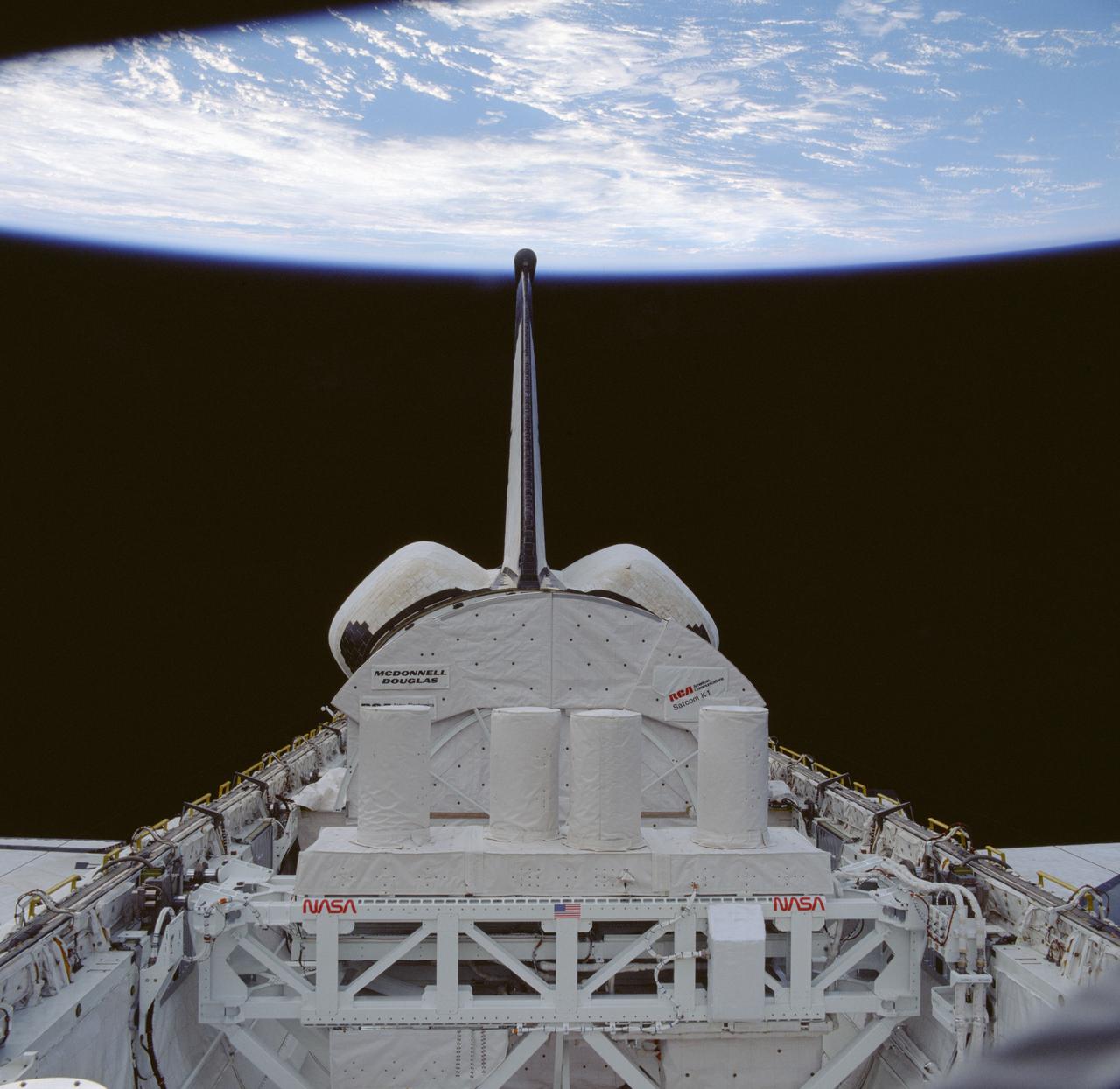
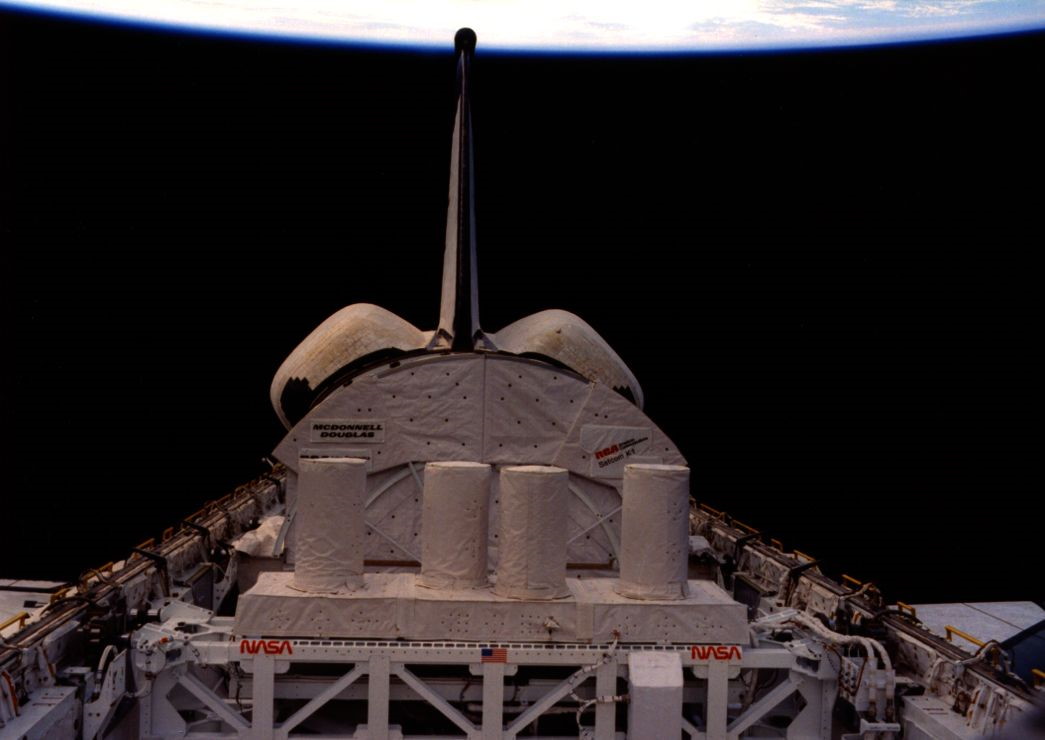
SATCOM-KU-1 satellite, attached to a PAM-D2 solid rocket motor, was deployed. Comet Halley Active Monitoring Program (CHAMP), a 35-mm camera to photograph Halley’s Comet, did not function properly due to battery problems.
Other payloads included Materials Science Laboratory-2 (MSL-2), Hitchhiker G-1, Infrared Imaging Experiment (IBSE), Hand-held Protein Crystal Growth (HPCG) experiment, three SSIP experiments and 13 GAS experiments.
SELECTED NASA PHOTOS FROM STS-61C